


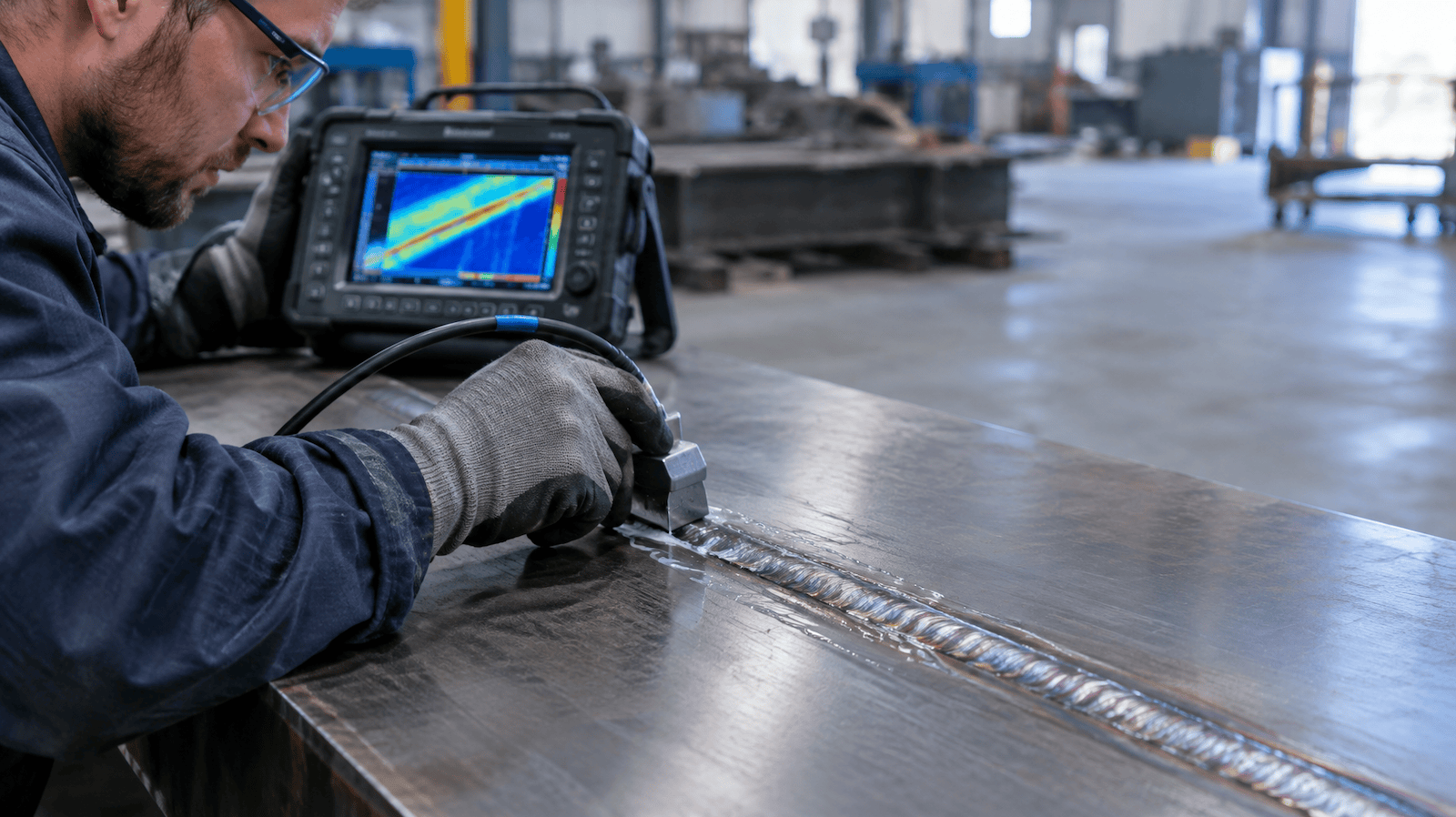
In industries where component integrity, safety, and compliance matter, simply performing an inspection is not enough. The value of nondestructive testing depends on how well the inspection is planned, executed, evaluated, and documented. A high-quality NDT inspection combines qualified personnel, the appropriate inspection method(s), clear procedures, reliable equipment, careful interpretation of results, and an understanding of the standards governing the work. Just as importantly, a strong NDT provider understands the customer’s application and can deliver accurate results without creating unnecessary delays or costs.
At Premier NDT Resources, our goal is straightforward: we provide reliable, thorough, and effective NDT support while helping customers meet their inspection requirements on schedule and within budget.
So, what separates a high-quality NDT inspection from simply checking a box? Here are some of the most important factors.
1. The Inspection Starts With Understanding the Requirement
A quality NDT inspection begins long before actual testing starts.
The inspector or NDT provider needs to understand what is being inspected, why the inspection is required, which specifications or acceptance criteria apply, and what types of discontinuities may be relevant. Material, geometry, manufacturing processes, service conditions, accessibility of the component, and applicable codes can all influence the inspection approach.
That is why there is no single NDT method that is automatically right for every application. The inspection technique must fit the component and the inspection objectives.
We support customers with a broad range of nondestructive inspection services, including:
- Conventional longitudinal and shear-wave ultrasonic testing
- Phased array ultrasonic testing (PAUT)
- Time of flight diffraction (TOFD)
- Ultrasonic bond testing using resonance, pitch-catch, and impedance techniques
- Magnetic particle testing, including visible and fluorescent methods
- Penetrant testing, including visible and fluorescent methods
- Eddy current testing for surface and bolt-hole applications
- Certified Welding Inspector (CWI) services and visual testing
We also offer both stationary and portable capabilities for certain inspection methods, adapting our NDT inspection services to different customer environments and applications.
2. Qualified, Knowledgeable Personnel Matter
Modern NDT equipment can comprehensively collect data. But it takes qualified personnel to know how to interpret what that data means and obtain useful and actionable insights.
Personnel qualification and certification are therefore fundamental to inspection quality. ASNT standards and recommended practices establish frameworks for the qualification and certification of NDT personnel, while particular industries and customers may impose additional requirements.
We support customers not only with inspection personnel, but also with NDT Level 3 services. Our Level 3 professionals can interpret codes, specifications, standards, and procedures, help designate appropriate NDT methods, evaluate inspection results against applicable requirements, develop or evaluate inspection techniques, and help organizations address corrective actions arising from audits.
That depth of expertise is important because high-quality NDT involves more than knowing how to operate equipment. Inspectors and the technical personnel supporting them need to understand the purpose of the inspection, the limitations of the specific methods being used, the governing requirements, and how findings should be evaluated.
3. NDT Inspection Procedures Must Match the Application
Consistency is another hallmark of a high-quality NDT inspection.
Inspection procedures provide the framework technicians need to perform examinations consistently and in accordance with applicable requirements. Depending on the industry and application, procedures need to address equipment, calibration, surface preparation, inspection technique, coverage, evaluation criteria, documentation, and other variables.
Our expertise extends beyond performing individual inspections. We specialize in NDT program development and administration, create and evaluate inspection techniques, support written practices and procedures, and help customers keep their programs aligned with changing codes and specifications.
This broader program-level approach can be especially valuable when an organization needs more than temporary inspection capacity. It helps connect the work performed in the field or shop with the procedures, personnel qualifications, and quality system behind it.
4. Quality NDT Inspections Require More Than Finding Discontinuities
It is easy to think of NDT as a simple pass/fail process: inspect the component, find a flaw, and determine whether it is acceptable.
In practice, quality inspection is more nuanced.
NDT methods have different strengths, limitations, and appropriate applications. A high-quality inspection must provide meaningful information about the condition being evaluated while minimizing the possibility of missed relevant indications, inaccurate interpretation, or unnecessary rework.
That requires attention throughout the process, from choosing the inspection technique to performing the examination and evaluating the results.
We approach inspection quality as a combination of technical accuracy, consistency, and practical execution. Inspections need to produce reliable results while also accounting for project schedules, production requirements, and other operational considerations.
Turnaround time and inspection quality should not come at the expense of one another. Inspections that produce reliable results but repeatedly disrupt production schedules are difficult to sustain. Likewise, fast turnaround provides little value if inspection quality suffers. A well-managed NDT inspection accounts for both, with appropriate procedures and technical rigor supporting an efficient inspection process. Strong NDT service providers understand that quality, reliability, responsiveness, and efficiency must work together.
5. Industry-Specific Expertise Strengthens Inspection Quality
An aerospace component, maritime weld, and railcar component may all require NDT, but that does not mean their inspection requirements are interchangeable.
Different industries operate under different codes, standards, specifications, certification requirements, and quality systems. Industry-specific knowledge helps an NDT provider understand not only how to perform an inspection, but also how that inspection fits into the customer’s larger compliance and quality objectives.
We work across demanding sectors including aerospace, government contracting, maritime, and rail, while also providing NDT expertise applicable to manufacturing, engineering, welding and fabrication, and other industrial applications.
In aerospace, for example, we support both manufacturing and maintenance environments and provide Level 3 services and training associated with requirements such as NAS 410.
In maritime applications, our experience includes the development, implementation, application, and compliance of welding, fabrication, and NDT programs associated with requirements such as NAVSEA and ABS. Our maritime capabilities include program audits, gap assessments, Level 3 services, training, and program development.
For rail customers, we provide services including program auditing, Level 3 support, interpretation of applicable codes and specifications, evaluation of inspection results, and development or evaluation of inspection techniques.
6. Training Supports Inspection Quality
High-quality NDT is also built through comprehensive training programs.
We offer customized on-site and off-site NDT training services, with courses ranging from required Level 1 and Level 2 training hours to advanced inspection techniques and training on newly acquired technology. Our instructors draw on experience as mentors and NDT Level 3 professionals to connect inspection theory with practical, real-world applications.
For organizations developing internal NDT capabilities, training can help improve consistency, reliability, and inspector preparedness. Combined with Level 3 oversight, program development, and inspection support, it also gives organizations access to a more comprehensive approach rather than treating individual inspections as isolated activities.
7. A Good NDT Provider Works as a Partner
Technical qualifications are essential, but they are not the only consideration when evaluating NDT inspection services.
Customers also need a provider that communicates clearly, understands schedules and operational constraints, responds when requirements change, and is willing to tailor its services to the application.
We believe in forming a working partnership with customers to protect their best interests. Rather than taking a one-size-fits-all approach, we customize our NDT programs and work with customers to identify cost-effective ways to meet their requirements and budgets.
That flexibility can be especially important when inspection needs fluctuate. A customer may need a specific inspection for one project, additional technicians during a busy production period, temporary Level 3 support, help developing an NDT program, specialized training, or assistance preparing for an audit.
A provider capable of supporting those needs can become more than an inspection vendor. It can serve as an extension of the customer’s quality organization.
High-Quality NDT Is About the Entire Process
Ultimately, the quality of an NDT inspection is not defined by a single piece of equipment or testing method. It comes from the entire process: understanding the requirement, selecting the right technique, using qualified personnel, following appropriate procedures, accurately interpreting results, and communicating findings effectively.
It also means delivering those services in a way that supports the customer’s schedule, budget, compliance obligations, and larger quality objectives.
Premier NDT Resources brings inspection capabilities together with Level 3 expertise, program development and administration, NDT training, and weld consulting to provide customers with comprehensive NDT support. Our focus on reliability, thoroughness, responsiveness, and customized service helps organizations address both immediate inspection requirements and longer-term NDT program needs.
Whether you’re looking for a specific inspection method, additional inspection capacity, Level 3 expertise, or broader program support, contact Premier NDT Resources to discuss your requirements and let us help you determine the right approach for your application.